The Real Secret to Soft & Fluffy Bread Rolls

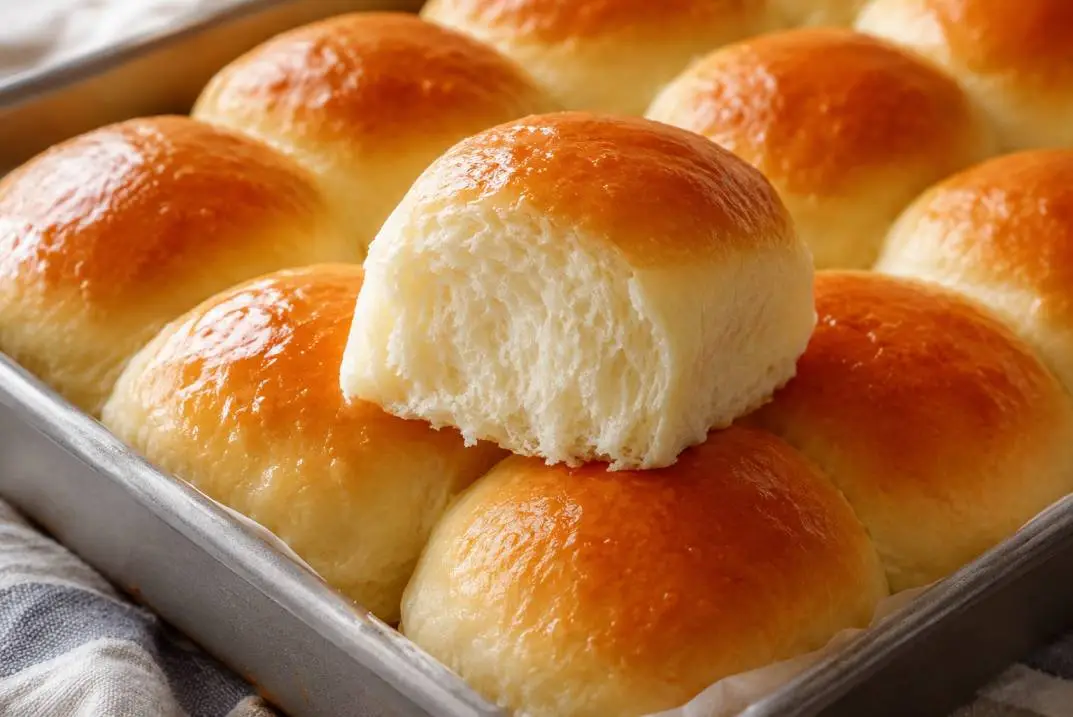
- Fat, eggs, and milk are the trio that transforms bread rolls from dense to pillowy.
- Longer, slower proofing creates a lighter, more complex crumb than rushing with extra yeast.
- Glass pans retain heat and create softer sides — a small change with a big result.
- Bread rolls can absolutely fit into a balanced diet — moderation and choice of flour matter.
- A step-by-step recipe and FAQ section are included below — don’t skip them.
There’s a moment every baker knows. You pull a tray of rolls from the oven, the kitchen fills with that warm, almost intoxicating smell, and you tap one on the bottom — hollow, perfect. Then you tear it open. Is the crumb soft, springy, pillowy? Or is it somehow dense and a little sad despite all your effort?
If you’ve been there, you’re not alone. The difference between a mediocre roll and a genuinely soft, fluffy one comes down to a handful of variables that most home bakers simply aren’t told about. I’ve spent years in professional kitchens breaking down exactly why dough behaves the way it does — and today, I’m giving you the full picture.
What Actually Makes Bread Rolls Light and Fluffy?
Let’s start with the science, because once you understand it, every decision you make in the kitchen starts to make sense. Fluffy bread is all about gas retention. Yeast consumes sugars in your dough and produces CO₂ — those tiny bubbles get trapped in the gluten network and expand during baking, giving you that open, airy crumb. Your job as a baker is to build a strong enough gluten network to hold those bubbles without making it so tight the bread becomes chewy and tough.
Two things undermine most home bakers: over-proofing with too much yeast (which actually weakens the gluten and collapses the structure) and under-developing the dough (not enough kneading, so the gluten network is patchy). More yeast does not mean fluffier bread — it usually means faster rising and a worse result. Patience, not quantity, is your best tool.
The Ingredients That Change Everything
Professional bakeries don’t produce soft rolls by accident. There’s a precise set of ingredients that create that pillowy texture — and understanding each one helps you make smarter choices even when you’re improvising.
🥛
Milk
Replaces water to tenderize the crumb. The lactose adds a subtle sweetness and the fat coats the gluten strands, preventing toughness.
🧈
Butter or Oil
Fat shortens gluten strands, creating tenderness. Butter adds flavor; oil creates a moister crumb that stays soft longer after baking.
🥚
Eggs
Adding one extra egg enriches the dough — the yolk adds fat and emulsifies it into the structure, while the white adds lift and structure.
🍬
Sugar
Feeds the yeast for better activity, promotes browning on the crust, and keeps the interior moist by retaining water molecules.
🌾
Bread Flour
Higher protein content (12–14%) means stronger gluten networks. For maximum softness, a 70/30 blend of bread and all-purpose flour works beautifully.
🧂
Salt
Controls yeast activity and strengthens gluten. Never skip it — but also never let it touch the yeast directly before mixing.
The Real Secret to Soft & Fluffy Bread Rolls
Ingredients
Step-by-Step Method
1
Activate the Yeast
Combine warm milk, sugar, and yeast in a large bowl. Stir gently and let sit for 8–10 minutes until foamy. If it doesn’t foam, your yeast is inactive — start over with fresh yeast.
2
Build the Dough
Add eggs to the yeast mixture and whisk to combine. Add flour and salt, then mix until a shaggy dough forms. Turn out onto a lightly floured surface.
3
Knead in the Butter
Knead the dough for 3 minutes, then begin adding softened butter one piece at a time. Continue kneading for 8–10 minutes total until the dough is smooth, elastic, and slightly tacky — not sticky.
4
First Rise
Place dough in a lightly oiled bowl, cover with plastic wrap or a damp towel, and let rise in a warm spot for 60–75 minutes until doubled in size. Do not rush this step.
5
Shape the Rolls
Punch down the dough and divide into 12 equal pieces (about 75g each). Shape each into a tight ball by folding the edges underneath and rolling on the counter. Place in a lightly greased 9×13 glass baking dish.
6
Second Rise
Cover loosely and let rise again for 30–40 minutes until rolls are puffed and touching each other in the pan. This side-by-side rise is what creates those signature soft sides.
7
Bake to Golden Perfection
Bake in a preheated oven at 190°C (375°F) for 18–20 minutes until the tops are deep golden brown. An internal temperature of 93°C (200°F) confirms they’re done.
8
Butter Finish
Immediately brush the tops with melted butter as soon as they come out of the oven. This is not optional — it’s what gives them that irresistible glossy, tender crust.
Use a glass baking dish rather than metal. Glass heats evenly and more gently, which keeps the sides and bottom of the rolls tender instead of forming a hard crust. It’s one of those small details that makes a real difference.
Are Bread Rolls Actually Healthy?
This is the question I get more than almost any other, and the answer is more nuanced than you might expect. Bread rolls made with refined white flour are a source of carbohydrates — and yes, refined carbs consumed in large quantities can contribute to weight gain and elevated triglycerides. But context matters enormously here.
One roll at a meal is not a dietary catastrophe. The real issue is portion, frequency, and what you eat alongside it. For people managing blood pressure or cardiovascular conditions, the answer isn’t to eliminate bread entirely — it’s to choose whole-grain or enriched flour rolls and be mindful of quantity. For diabetics, the glycemic load of white rolls is a genuine concern, and opting for rolls made with a blend of whole wheat and white flour genuinely helps slow glucose absorption.
The healthiest roll is one made at home, where you control the ingredients. No added preservatives, no industrial seed oils, no mystery additives. A homemade roll is simply: flour, yeast, milk, butter, egg, salt, and sugar. That list is shorter and cleaner than almost anything on a supermarket shelf.
✦
Frequently Asked Questions
The questions people ask most — answered honestly, from a chef’s perspective.
Does letting bread rise longer make it fluffier?
Yes — up to a point. A longer, slower rise (especially in the refrigerator overnight) allows yeast to develop more complex flavors and gives gluten more time to relax and strengthen. This produces a lighter, more open crumb than a fast rise. However, if you let dough proof too long, the yeast exhausts its food supply and the gluten structure weakens, causing the dough to collapse. The sweet spot is a full rise until doubled — no more, no less.
Does adding more yeast make bread fluffier?
This is one of the most common baking myths, and the answer is no. Adding more yeast makes bread rise faster — but speed is the enemy of texture here. A rapid rise means the gluten network hasn’t had time to develop properly, so it can’t hold the gas bubbles effectively. The result is often a coarser crumb that deflates in the oven. Stick to the recommended amount and give your dough the time it needs.
What does adding an extra egg to bread dough do?
It makes a meaningful difference. The egg yolk adds richness and fat that tenderizes the gluten, while the egg white adds structure and lift. Together, they create a slightly richer crumb that stays softer longer after baking — which is why enriched doughs like brioche and dinner rolls almost always contain eggs. If a recipe calls for one egg, adding a second yolk (not a whole egg) is a simple upgrade that noticeably improves softness.
Is it better to bake rolls in glass or metal?
For soft dinner rolls, glass wins. Metal pans — especially dark ones — conduct heat more aggressively, which creates a thicker, harder crust on the bottom and sides of the rolls. Glass heats more gently and evenly, preserving that soft, pillowy exterior all the way around. If you only have a metal pan, reduce the oven temperature by 10–15°C and keep a close eye on the bottom during the last few minutes of baking.
Now Go Make Something Wonderful
Great bread rolls aren’t about luck or secret ingredients. They’re about understanding what you’re doing and why — and then doing it with care. The recipe above will give you results you’re proud of. Try it once, and you’ll never go back to store-bought.