Classic Victoria Sponge Cake

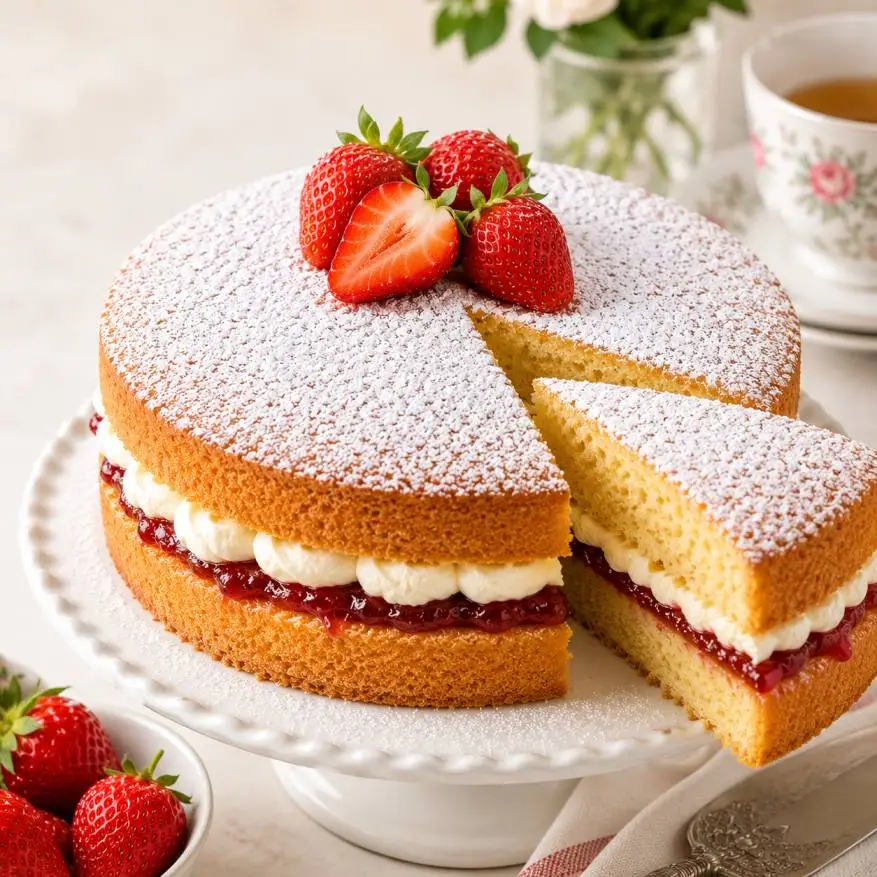
Victoria Sponge Cake Recipe
Introduction
The Victoria Sponge Cake is one of the most iconic and beloved desserts in baking history. Known for its light, airy texture and simple yet elegant presentation, this classic cake has been enjoyed for generations. Traditionally filled with a layer of sweet jam and freshly whipped cream, it strikes the perfect balance between richness and lightness.
Named after Queen Victoria, who was said to enjoy a slice with her afternoon tea, this cake has become a staple in homes and bakeries around the world. Its charm lies in its simplicity—no complicated techniques, just quality ingredients and careful preparation.
This recipe will guide you through creating a perfectly soft and fluffy sponge with a delicate crumb, sandwiched together with luscious filling. Whether you are baking for a celebration, tea time, or simply to enjoy a homemade treat, this Victoria Sponge Cake will never disappoint.
Ingredients
For the Sponge Cake
1 cup (225g) unsalted butter, softened
1 cup (225g) granulated sugar
4 large eggs
1 ¾ cups (225g) self-rising flour
1 teaspoon baking powder
2 tablespoons milk
1 teaspoon vanilla extract
For the Filling
½ cup (120ml) heavy cream
2 tablespoons powdered sugar
1 teaspoon vanilla extract
⅓ cup strawberry or raspberry jam
For Decoration
Powdered sugar (for dusting)
Equipment Needed
Two 8-inch round cake pans
Mixing bowls
Electric mixer or whisk
Spatula
Cooling rack
Knife or cake leveler
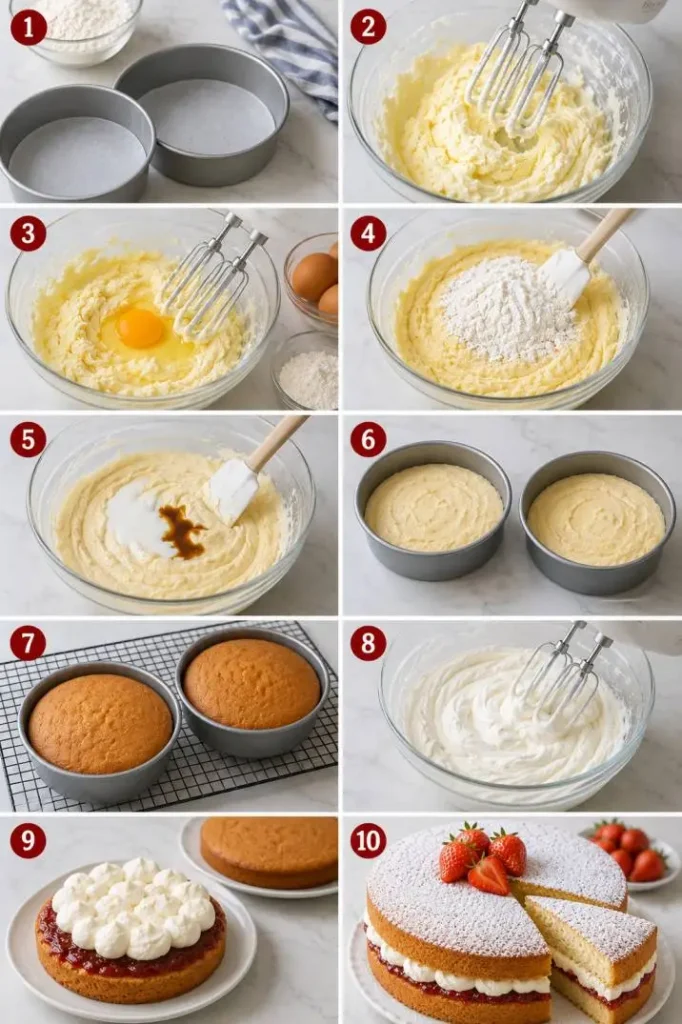
Step-by-Step Instructions
Step 1: Preheat and Prepare
Preheat your oven to 350°F (175°C). Grease and line two cake pans with parchment paper. This ensures your cakes release easily after baking.
Step 2: Cream Butter and Sugar
In a large mixing bowl, beat the softened butter and sugar together until pale, light, and fluffy. This step is crucial because it incorporates air into the mixture, helping create a light sponge.
Take your time here—mix for about 3–5 minutes until the texture becomes creamy and slightly whipped.
Step 3: Add Eggs Gradually
Add the eggs one at a time, beating well after each addition. If the mixture starts to curdle, add a small spoonful of flour to stabilize it.
This gradual process helps maintain a smooth batter and prevents separation.
Step 4: Incorporate Dry Ingredients
Sift together the flour and baking powder. Gently fold the dry ingredients into the batter using a spatula. Avoid overmixing, as this can make the cake dense.
Step 5: Add Milk and Vanilla
Stir in the milk and vanilla extract until the batter is smooth and slightly loose. This helps achieve a soft, moist crumb.
Step 6: Divide and Bake
Divide the batter evenly between the prepared cake pans. Smooth the tops with a spatula.
Step 7: Cool the Cakes
Allow the cakes to cool in the pans for 5–10 minutes, then transfer them to a cooling rack. Let them cool completely before assembling.
Step 8: Prepare the Filling
Be careful not to overwhip.
Step 9: Assemble the Cake
Place one cake layer on a serving plate.
Step 10: Decorate
Slice and serve.
Tips for Perfect Victoria Sponge
Use Room Temperature Ingredients
This ensures smooth mixing and even baking.
Don’t Overmix
4.Overmixing can lead to a dense cake instead of a light sponge.
Measure Accurately
Baking is precise—use proper measurements for best results.
Check Your Oven
Oven temperatures can vary, so keep an eye on your cake toward the end of baking.
Variations
Fruit Variation
Add fresh strawberries or raspberries for extra flavor and texture.
Buttercream Filling
4.Replace whipped cream with vanilla buttercream for a richer taste.
Lemon Version
Storage Instructions
Serving Suggestions
Serve with tea or coffee
Pair with fresh berries
Add a drizzle of cream for extra indulgence
Nutritional Information (Approximate per slice)
Calories: 350–400
Fat: 20g
Carbohydrates: 35g
Protein: 5g
History of Victoria Sponge Cake
The Victoria Sponge Cake dates back to the 19th century and is closely associated with British afternoon tea culture. Queen Victoria herself popularized the tradition of enjoying a light cake with tea, making this dessert a symbol of elegance and simplicity.
Unlike modern cakes that can be overly sweet or complex, the Victoria Sponge remains true to its roots—simple ingredients, balanced flavors, and a focus on texture.
Why You’ll Love This Recipe
Easy to make with basic ingredients
Light, fluffy, and not overly sweet
Perfect for any occasion
Customizable with different fillings
Common Mistakes to Avoid
Using cold butter (prevents proper creaming)
Overbaking (leads to dryness)
Skipping the cooling step before assembling
Using too much filling, causing the cake to slide
Conclusion
The Victoria Sponge Cake is a timeless dessert that combines simplicity with elegance. With its soft layers, sweet filling, and delicate finish, it’s a cake that never fails to impress.
Whether you’re baking for a special occasion or simply enjoying a quiet afternoon treat, this recipe offers a reliable and delicious result every time. Once you master this classic, it will likely become a favorite in your baking collection.